Today, we are witnessing the creation of atrocity propaganda in real-time.
— Keith Woods (@KeithWoodsYT) October 10, 2023
What is atrocity propaganda, and how has it been used to win support for war? A thread:
🧵 1/12 pic.twitter.com/8QMt4eA37c
2/12: An atrocity tale is designed to shock a mass audience by showing a violation of a fundamental cultural value which authorises force to stop the perpetrator.
— Keith Woods (@KeithWoodsYT) October 10, 2023
They are directed at groups rather than individuals. The ultimate goal is to dehumanise an enemy. pic.twitter.com/DTVrxPpyv3
3/12: One of the earliest examples of atrocity propaganda was during the Irish rebellion of 1641.
— Keith Woods (@KeithWoodsYT) October 10, 2023
Reports were sent to England of massacres of the innocent by the rebels, and there were later used to justify Cromwell's slaughter of captured Irish rebels. pic.twitter.com/UI7flgn1PT
4/12: The most graphic accounts were published in the English press. Newspapers fabricated graphic accounts of babies being ripped from pregnant women.
— Keith Woods (@KeithWoodsYT) October 10, 2023
These reports especially incited the English public against the Irish. pic.twitter.com/wleErVRVPL
5/12 Atrocity propaganda in 1641 vs. 2023 pic.twitter.com/VhABuzKLpb
— Keith Woods (@KeithWoodsYT) October 10, 2023
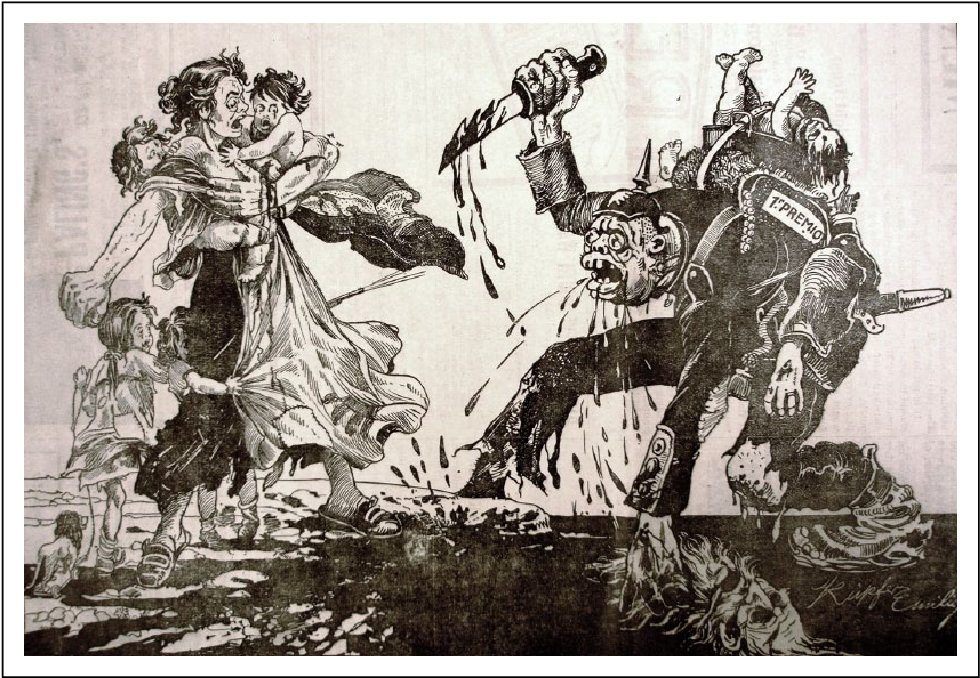
6/12: With the spread of communications technology in the 20th Century, atrocity propaganda became more important for garnering support for war. Some of the worst examples came in WW1.
— Keith Woods (@KeithWoodsYT) October 10, 2023
British propaganda, backed by the press, portrayed the Germans as barbaric aggressors pic.twitter.com/MWFH8Y7TNZ
7/12: British media reported stories of the Germans bayoneting Belgian babies and cutting off their hands.
— Keith Woods (@KeithWoodsYT) October 10, 2023
Reports came from Belgium of giant German "corpse factories", where dead bodies were harvested to be turned into candles, lubricants, and boot wax. pic.twitter.com/WYza2egZw7
8/12: One of the worst examples of atrocity propaganda is the so-called Nayirah testimony.
— Keith Woods (@KeithWoodsYT) October 10, 2023
In the run up to the Gulf War, A 15 year-old Kuwaiti girl gave testimony to US Congress about the horrors of the Iraqi invasion of Kuwait, most notably babies being pulled from incubators. pic.twitter.com/Ti61ZuzNlS
9/12: Nayirah’s testimony was rebroadcast across the country and marked a turning point in public opinion on going to war with Iraq.
— Keith Woods (@KeithWoodsYT) October 10, 2023
President Bush repeatedly cited her claims to justify the necessity of the war. pic.twitter.com/alVZlj5zds
10/12: It turned out Nayirah was the daughter of Kuwait's ambassador to the US.
— Keith Woods (@KeithWoodsYT) October 10, 2023
Her testimony was organised as part of a 'Citizens for a Free Kuwait' public relations campaign.
This was itself was a front-group, created by an American PR firm hired by the Kuwaiti government. pic.twitter.com/kFtCIdolMn
11/12: You may notice a trend with these atrocity tales: children as the subject of violence.
— Keith Woods (@KeithWoodsYT) October 10, 2023
This makes sense. Regardless of the intricacies of a conflict, if one side is slaughtering children, they are obviously irredeemably evil. Who could defend baby killers? pic.twitter.com/liILJyuDo5
12/12: Today, we may be seeing the creation of atrocity propaganda in real time, this time through the medium of social media.
— Keith Woods (@KeithWoodsYT) October 10, 2023
History should remind us to not be guided by emotion, and treat all claims which direct us toward demands for war with a good degree of skepticism. pic.twitter.com/o9FaqZVMdy


Leave a comment