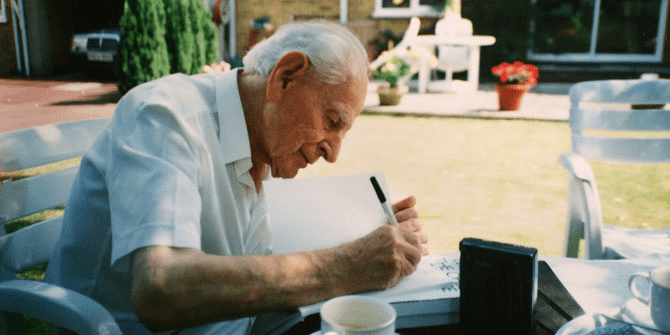
Karl Popper | The Philosopher of Modern Liberalism
— Keith Woods (@KeithWoodsYT) May 12, 2023
Probably no political philosopher's vision of things more definitively won out in the latter half of the 20th century than Karl Popper.
Popper, not Marx, is the philosopher of the modern left. Let's find out why.
1/25 🧵 pic.twitter.com/sMoFXHg6tq
2/25 Karl Popper was born into a Viennese Jewish family that converted to Lutheranism.
— Keith Woods (@KeithWoodsYT) May 12, 2023
Fearing his position as a Jew in post-Anschluss Austria, Popper moved to lecture in New Zealand in 1937. In 1946, he moved to the UK to join the London School of Economics pic.twitter.com/ndWmMDFelE
3/25 Popper's greatest contributions were to Philosophy of Science. At first influenced by positivism, he rejected their principle of verification, and popularised the principle of falsifiability – generalisations are only useful for science if they can in principle be falsified. pic.twitter.com/fEOj7wr8QN
— Keith Woods (@KeithWoodsYT) May 12, 2023
4/25 While WW2 was raging, Popper wrote The Open Society and Its Enemies (which inspired George Soros' Open Society Foundation). The book was an attempt to diagnose what had led to the barbarism the world was witness to.
— Keith Woods (@KeithWoodsYT) May 12, 2023
Popper's diagnosis was that civilization faced a choice: pic.twitter.com/KGISdMqQ6B
5/25 Humanity could choose a "closed society", characterised by tribalism and the subordination of the individual to the collective will, or enlightened men could instead choose "the open society".
— Keith Woods (@KeithWoodsYT) May 12, 2023
In Popper's mind, the fate of civilization depended on the latter. pic.twitter.com/ww53Hn0BIz
6/25 Although the book itself is quite academic, it had a profound influence due to its simple moral axiom which would capture the mood of the post-war West – Never Again: pic.twitter.com/Dq1eMjtZAi
— Keith Woods (@KeithWoodsYT) May 12, 2023
7/25 "The imperative is bracingly simple: Never again. Never again shall we allow totalitarian governments to emerge. Never again shall societies reach a fever pitch of ideological fanaticism. Never again shall the furnaces of Auschwitz consume their victims."
— Keith Woods (@KeithWoodsYT) May 12, 2023
– R. R. Reno pic.twitter.com/v8oHMQd1bS
8/25 Embracing the ideal of openness requires us to critically deconstruct "the strong gods" of the closed society: the nation, the family, religion, totalitarian ideologies like fascism and communism that subjugate the freedom of the individual to a collective project. pic.twitter.com/rJ9PK9gCJ8
— Keith Woods (@KeithWoodsYT) May 12, 2023
9/25 Even the philosophical father of Western Philosophy – Plato – comes under attack from Popper.
— Keith Woods (@KeithWoodsYT) May 12, 2023
Plato's ideal of an organic society allowed him to justify extreme totalitarianism of Philosopher Kings. Plato laid the foundation for a totalitarian tendency in Western thinking. pic.twitter.com/MLVwxZ9HV1
10/25 Popper wrote that the Noble Lie, the foundation myth of Plato’s Republic, was “an exact counterpart” to “the modern myth of Blood and Soil.” pic.twitter.com/TzsvxOzHtw
— Keith Woods (@KeithWoodsYT) May 12, 2023
11/25 As well as diagnosing the intellectual tradition of the closed society, Popper offers a psychological diagnosis.
— Keith Woods (@KeithWoodsYT) May 12, 2023
People resort to collectivism and atavistic impulses because critical thinking is difficult, freedom requires an ongoing strain and vigilance easy to reject. pic.twitter.com/jNBzm0LU4L
12/25 At the same time, Frankfurt school Marxo-Freudians were writing screeds on the psychological appeal of totalitarianism to the weak.
— Keith Woods (@KeithWoodsYT) May 12, 2023
Fromm wrote of the soothing "escape from freedom offered by National Socialism. Adorno diagnoses the roots of "The Authoritarian Personality" pic.twitter.com/H2jhrNl8lj
13/25 But Popper takes his attack on the foundation of Western Philosophy deeper than politics. The metaphysical projects of Plato and Aristotle themselves also contain the seeds of totalitarianism.
— Keith Woods (@KeithWoodsYT) May 12, 2023
This is because of a tendency Popper terms "essentialism". pic.twitter.com/2SAFkmytkc
14/25 Essentialism is the idea that reality consists of ultimate essences and we ought to explain reality in terms of ultimate essences.
— Keith Woods (@KeithWoodsYT) May 12, 2023
This is exemplified in Plato's theory of the forms – where the world of flux is seen to be the instantiation of eternal archetypes of forms. pic.twitter.com/xHrZDKBsl2
15/25 If philosophers can know the essence of things, they can know the truth. And if they have the privileged position of knowing the truth, they can justify totalitarianism.
— Keith Woods (@KeithWoodsYT) May 12, 2023
This essentialism leads to another tendency Popper opposed: historicism. pic.twitter.com/m9Ilz5GDda
16/25 Historicism is the view that history is governed by set laws, with a necessary direction or end-point.
— Keith Woods (@KeithWoodsYT) May 12, 2023
Plato, believing there was a form of the perfect city, instantiated a peculiar political science which aimed to arrest the cyclical process of decay of the ideal city. pic.twitter.com/qF5PaCsGcC
17/25 And so Popper traces the intellectual tendency towards political totalitarianism right back to the foundations of Western civilization in Greek thought: the totalitarian attempt to know an objective truth of things, to grasp the essences of reality. pic.twitter.com/QhR1WqnbjF
— Keith Woods (@KeithWoodsYT) May 12, 2023
18/25 "Popper sees any form of transcendence as implicitly totalitarian. The recognition of something higher than the individual sets up a suprapersonal authority. If I can know what it means to be human, then I have a standard by which to judge individual behavior."
— Keith Woods (@KeithWoodsYT) May 12, 2023
– R. R. Reno pic.twitter.com/td5UrBR5lT
19/25 Also dangerous in this regard are the theories of historical development advocated by Hegel and Marx.
— Keith Woods (@KeithWoodsYT) May 12, 2023
In place of this, Popper advocates nominalism in epistemology and piecemeal social engineering, focusing on remedying specific social issues and injustices. pic.twitter.com/HbdA8wPcFX
20/25 But the key to social progress must be the restriction of truth-claims to those that are falsifiable.
— Keith Woods (@KeithWoodsYT) May 12, 2023
We must discard the strong gods of metaphysics, faith, nation, and abstractions like the ideal society. pic.twitter.com/srgHLvEfuV
21/25 In this regard Popper anticipates later liberal thinkers like Rawls, who advocate organising society on the basis of rights rather some overarching conception of the good which requires metaphysical justification.
— Keith Woods (@KeithWoodsYT) May 12, 2023
Politics should be scientific rather than metaphysical. pic.twitter.com/sOOl9JrLXu
22/25 Although Popper's political philosophy leaves a gap of meaning, there is an implicit Manichean battle to come between the tolerant defenders of openness and the ignorant, unenlightened mass who will feel the pull of forces like nationalism again. pic.twitter.com/MKADbjISAr
— Keith Woods (@KeithWoodsYT) May 12, 2023
23/25 The 20th century proved that the final result of the latter tendency is Auschwitz.
— Keith Woods (@KeithWoodsYT) May 12, 2023
From now on the guiding impulse of every enlightened person must be "never again". This realisation brings with it Popper's famous Paradox of Tolerance: pic.twitter.com/57rn8zzzAj
24/25 "If we extend unlimited tolerance even to those who are intolerant, if we are not prepared to defend a tolerant society against the onslaught of the intolerant, then the tolerant will be destroyed, and tolerance with them." pic.twitter.com/VlG5m5EeEx
— Keith Woods (@KeithWoodsYT) May 12, 2023
25/25 Popper's paradox allows liberals to justify the greatest repression of anyone declared an enemy of the open society: Nazis, Christian Nationalists, racists, transphobes.
— Keith Woods (@KeithWoodsYT) May 12, 2023
The Manichean struggle for openness reaches the point of total war against the bigoted and backward. pic.twitter.com/oZB13ofVK8
Share this:
- Share on Telegram (Opens in new window) Telegram
- Share on Facebook (Opens in new window) Facebook
- Share on LinkedIn (Opens in new window) LinkedIn
- Share on Reddit (Opens in new window) Reddit
- Share on Tumblr (Opens in new window) Tumblr
- Share on Pinterest (Opens in new window) Pinterest
- Share on WhatsApp (Opens in new window) WhatsApp
- Share on Mastodon (Opens in new window) Mastodon
- Share on Nextdoor (Opens in new window) Nextdoor
- Share on X (Opens in new window) X
- Email a link to a friend (Opens in new window) Email
 Zoomernation news
Leave a comment